
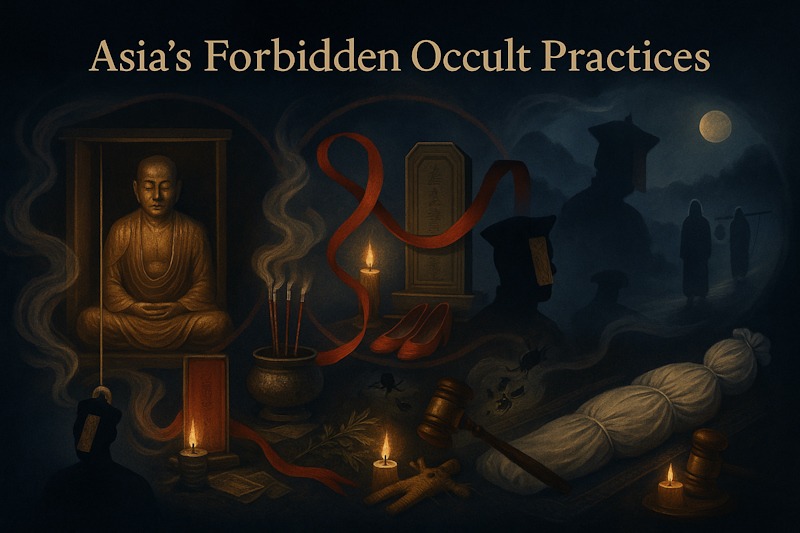
What Was Banned, Why It Shocked Society, and What Lingers Today
Across the vast expanse of Asia, folklore and belief coexist seamlessly with everyday life. Many communities have long practiced rituals intended to protect families, soothe the restless spirits, or confront wrongdoing. Some were tolerated for centuries, even respected. Others frightened authorities, fueled crime, or crossed moral lines, and were eventually outlawed or officially suppressed. The five practices below come straight from that uneasy borderland. They are dramatic, often heartbreaking, and reveal a great deal about how societies grapple with death, guilt, and the unseen.
Important note before we begin: several practices survived in folk memory even after bans took effect. So when we say “forbidden,” we mean banned outright in law, or stamped out by authorities, or curtailed to the point that only fragments or abuses survive. With that in mind, let’s step through the most striking cases.
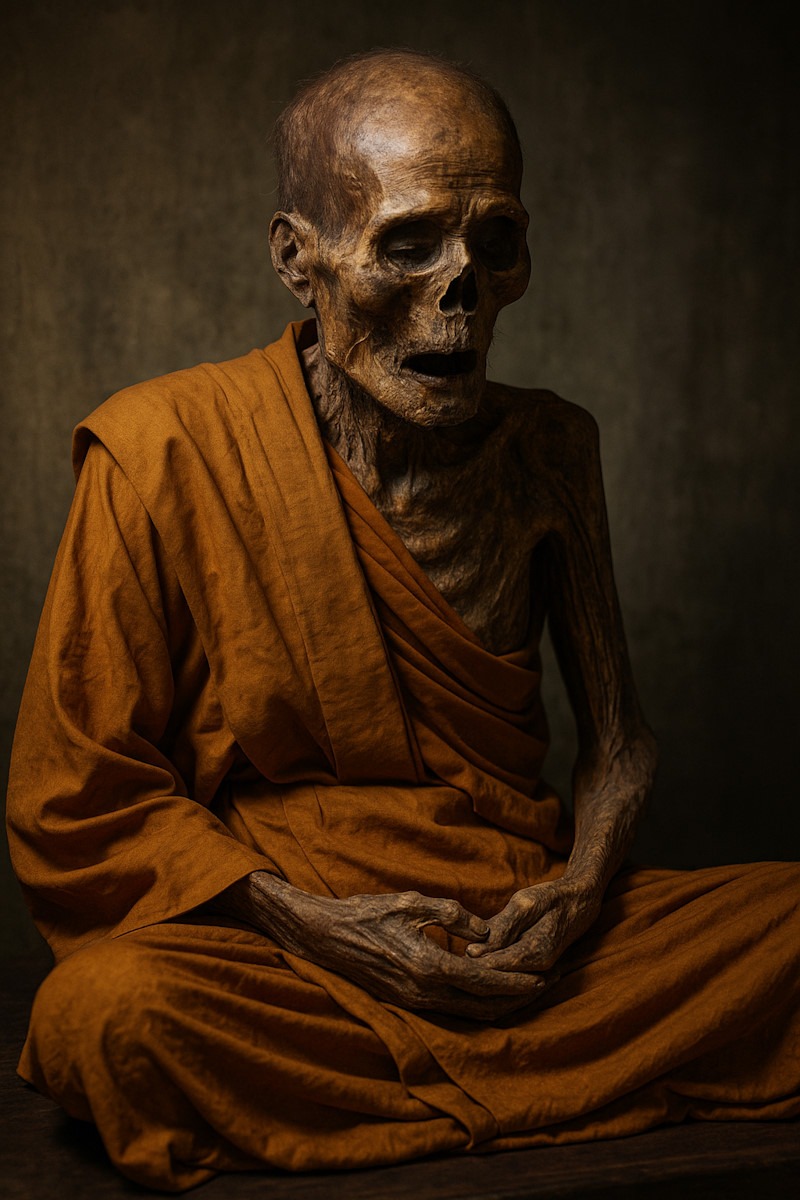
1) Sokushinbutsu in Japan – the self-mummified monk
Few traditions are as haunting as sokushinbutsu, the path of self-mummification practiced by a small number of ascetic Buddhist monks in northern Japan. The aim was not spectacle. Practitioners believed that by stripping the body of fat, moisture, and decay, then dying in deep meditation, a monk could dwell in perpetual contemplation and serve as a living symbol of enlightenment for future generations.
The regimen was brutal. Monks spent roughly 3,000 days on a foraged diet of seeds, pine needles, and tree bark. This “eat a tree” phase intentionally starved both the monk and the bacteria that would typically help break down a corpse. The final hundred days consisted of a complete fast, with only saline water and urushi tea. This toxic infusion further purged moisture, making the body unappealing to worms and maggots. At the end, an elder monk descended into a cramped wooden chamber set a few meters below ground, sat in the lotus position, and rang a bell daily through a bamboo tube to signal he was still alive. When the bell fell silent, the tube was removed and the tomb sealed. After many months, the community reopened the chamber to see if the mummification had been successful.
It almost never did. Hundreds tried. A tiny handful were later enshrined in temples, their faces serene in a glass case. To imperial authorities in the modern era, this was not a matter of holiness but rather death by slow self-denial. The practice was formally banned in the late 19th century during the Meiji reforms, which targeted customs deemed cruel, superstitious, or detrimental to Japan’s modern image. Museums and temples still display a few preserved figures, but the path itself is finished. What remains is a cultural paradox: compassion for the dedication, horror at the method, and a lasting argument about where spiritual liberty ends and the state’s duty to protect life begins.
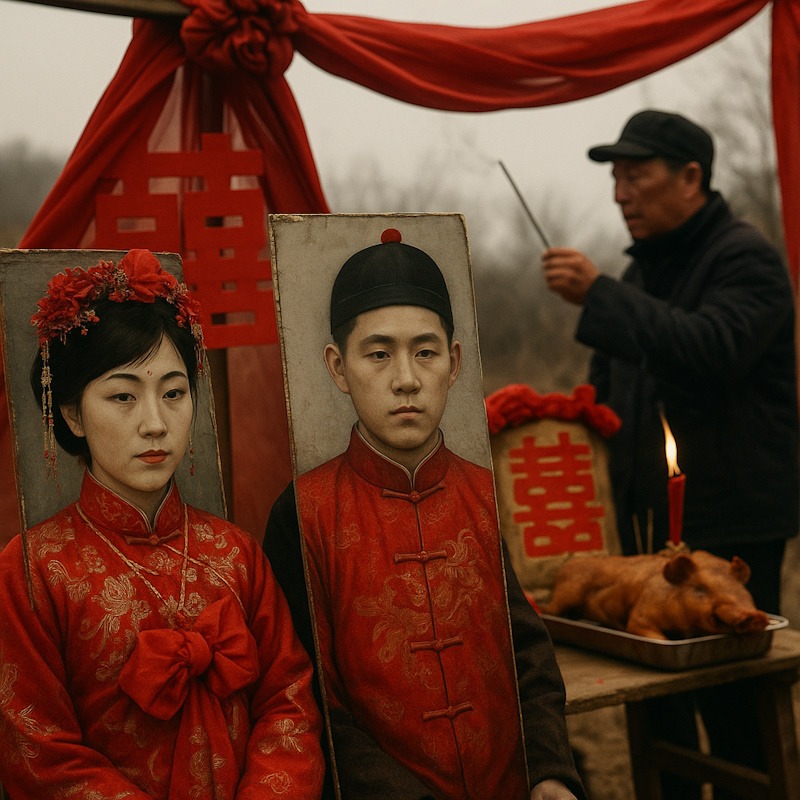
2) Chinese ghost marriages – love, profit, and crime
Ghost marriages grew from the traditional belief that the afterlife mirrors the living world. The dead also need a household, companionship, and a steady path forward. Families sometimes arranged for a deceased son or daughter to be “married” after death, pairing them with another deceased partner or, more rarely, with a living stand-in. The goal was to bring comfort to the soul and peace to the living who feared a restless ghost.
On paper, this is not a violent custom. In practice, the modern era produced a predatory market. Matchmakers charged fees to pair families. Prices rose sharply as demand outpaced supply. That gap was filled by grave robbers and worse. Reports surfaced of tombs looted for female remains, corpses sold across provinces, and even murders of vulnerable women whose bodies were then trafficked for ghost weddings. Authorities cracked down hard. While the ancestral idea of a posthumous union has not entirely disappeared, the criminal economy around it provoked public outrage and legal bans on corpse theft, body sales, and any related profiting from human remains.
The result today is a split reality. The cultural memory of ghost marriage still exists in some regions as a solemn family rite using symbolic objects or ashes with proper permission. The illegal trade that grew around it is prosecutable, and sensational cases tend to trigger waves of enforcement. At heart, this is a story about grief, dignity, and the danger of reducing the dead to commodities.
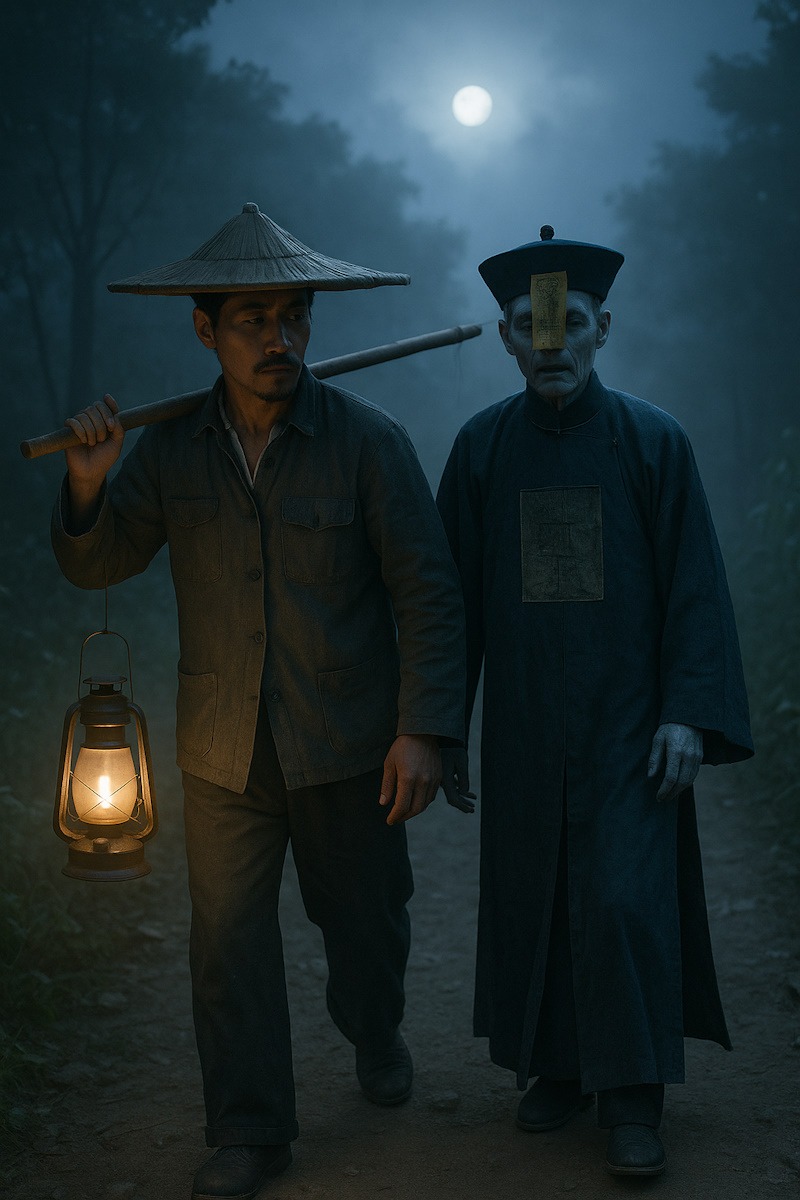
3) Corpse herding in southern China – a spectacle that birthed the hopping vampire
If you have ever seen images of stiff-robed figures with yellow talismans on their foreheads, you have glimpsed the jiangshi of Chinese folklore, the so-called hopping vampire. One of the strangest possible roots of that image lies in the old business of corpse herding. In mountainous regions far from rail lines, a body might need to travel a great distance to reach home soil for burial. Hiring bearers was costly for poor families. Enter the “corpse herders,” who claimed ritual mastery that could make the dead walk back on their own.
The show was carefully staged. A priest struck a gong to clear the road and warn villagers not to stare. White lanterns bobbed through the night. Bodies were lashed upright to bamboo poles that flexed rhythmically as two men at either end walked in tandem. Seen from a distance, or glimpsed through fear and superstition, the line of swaying, shrouded figures looked like a file of the undead. Add talismans and incantations, and you have pure theater, designed to discourage prying eyes and speed the convoy without interference.
Modernizing governments had little patience for this mix of fear, profit, and superstition, as the state centralized power, practices branded as counter to public order or as dangerous folklore were banned. Corpse herding vanished. The legend lived on in movies, TV, and comics, and you can still hear the gong echo in pop culture. But the nighttime procession itself, part practical service and part conjurer’s trick, is gone.
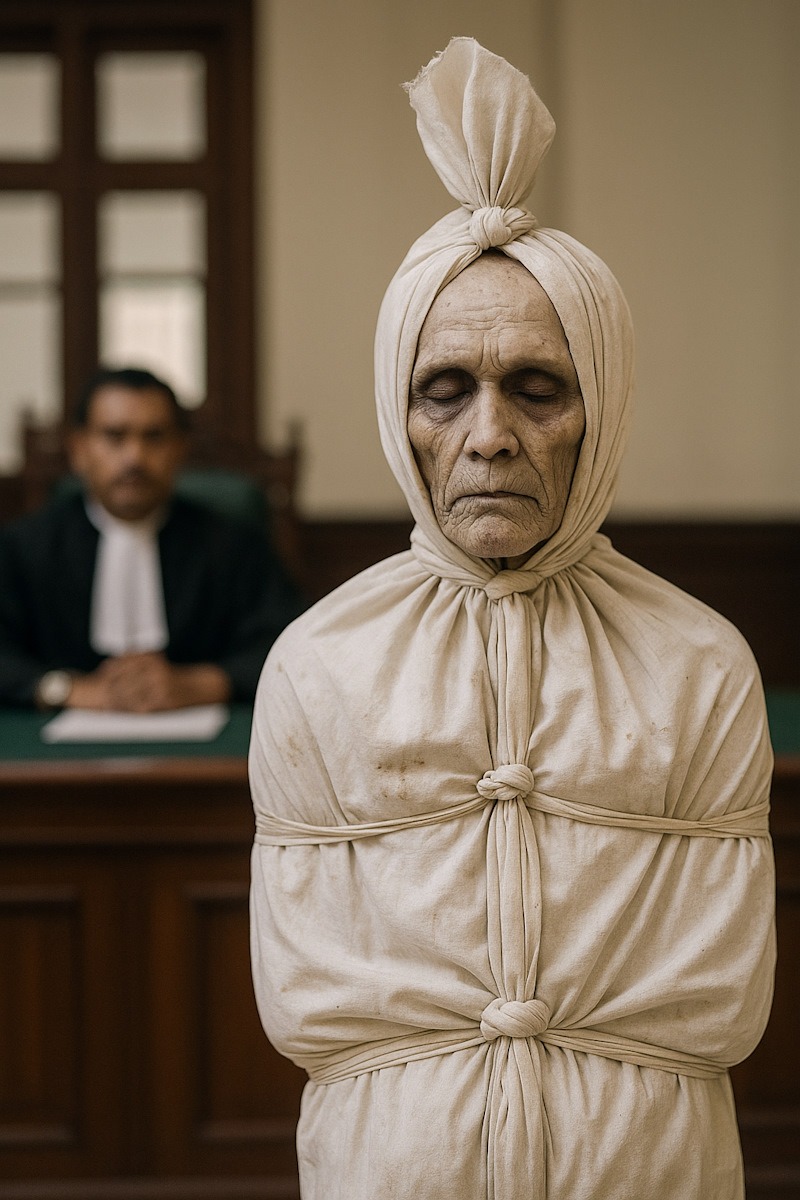
4) Sumpah pocong in Indonesia – a terrifying oath that courts rarely touch
In Indonesia, particularly on Java, communities know the sumpah pocong as the most fearsome oath a person can swear. The accused is washed like a corpse, wrapped in a white burial shroud, laid toward the qibla, and made to pledge innocence before God. The ritual plays on the horror of becoming a pocong: a spirit in Islamic funeral lore that rises if the knots on the shroud are never untied at burial. To invoke that image is to say, in the strongest possible terms, that God should punish you if you lie.
Legally, this ritual sits outside formal procedure. Some local judges have tolerated it as a form of community-sanctioned oath in disputes, typically in rural areas where tradition holds significant weight. Prominent religious figures, however, condemn the practice. They argue that it confuses faith with fear and invites superstition into matters that should be handled by evidence and law. As a result, sumpah pocong has no official standing nationwide and is widely discouraged by Islamic leaders. You will not find a statute that prescribes it. In effect, it is publicly disapproved and institutionally sidelined, even if a few cases still surface on the margins.
So while not “banned” in a single sentence of law across all of Indonesia, it is certainly not recognized as legitimate evidence and attracts intense criticism from clerics and jurists alike. The social reality is simple. If you resort to it, people will talk, officials may bristle, and the consequences if you are later proven to have lied can be severe in court and in the community’s eyes.
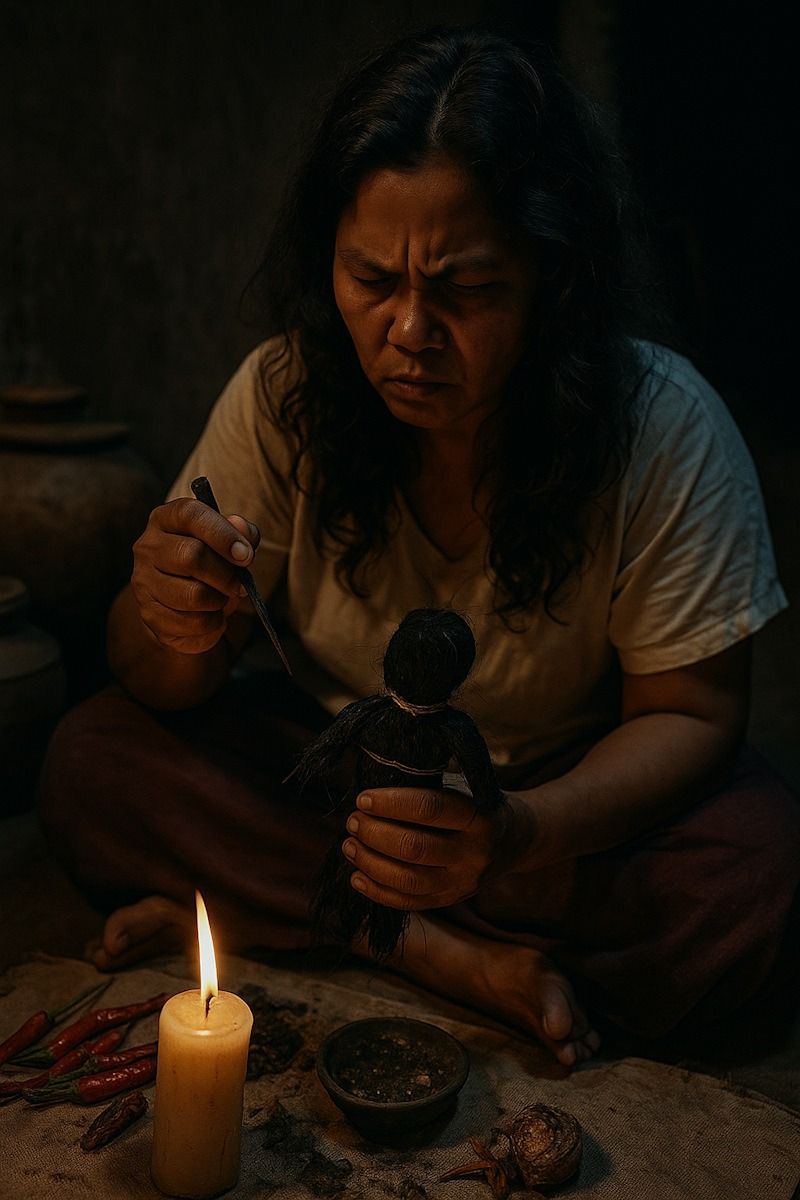
5) Kulam in the Philippines – witchcraft, fear, and the line where law begins
Across the Philippines, talk of kulam still raises goosebumps. It is a catchall term for sorcery: curses cast with hair clippings, effigies pierced with needles, chants whispered over pots that supposedly swell a victim’s belly with the ocean’s tide. One figure looms especially large: the mambabarang, a sorcerer said to send insects crawling into the body through the mouth, ear, or worse. Tales describe victims wracked with pain as beetles or worms burrow and lay eggs, effects that modern minds might chalk up to illness, suggestion, or tragic misdiagnosis. The belief persists because it speaks to real fears: envy, betrayal, and harm that strikes from the shadows.
Is kulam illegal? Practicing a belief is not a crime, but harming someone is. The moment a curse becomes poisoning, assault, fraud, or intimidation, ordinary criminal laws apply. Historically, colonial regimes and later authorities targeted “superstition” as a sign of backwardness and occasionally punished practitioners outright. In contemporary life, the state primarily prosecutes concrete offenses, not beliefs. Communities, meanwhile, continue to turn to counter-rituals, healers, and counter-spells, mirroring a larger theme in Southeast Asia where the spiritual and medical worlds overlap.
This is not a tidy story of a clean ban. It is a story about fear and responsibility. Where there is harm, the law intervenes. Where there is belief without apparent injury, communities handle it through tradition and caution. The modern state draws its bright lines at violence, coercion, and exploitation.
Bans, crackdowns, and gray zones
Put these five together, and a pattern appears.
-
Outright bans target practices that end a life or obviously exploit the dead, such as sokushinbutsu and corpse herding. Authorities saw those as cruelty, deception, or a threat to public order.
-
Crackdowns on criminal spillovers show up in ghost marriages. The cultural impulse to care for the dead collided with a market that turned women’s remains into inventory. The abuses brought vigorous enforcement.
-
Social and religious pressure weighs heavily against sumpah pocong. Even if local exceptions arise, national courts and leading clerics reject it as superstition. In everyday terms, that is a functional ban from respectable institutions.
-
A legal focus on harms, rather than beliefs, defines the approach to kulam. The moment sorcery becomes a form of poisoning or extortion, it is a crime. Without harm, it remains in the realm of taboo and fear.
Across all five, the boundary is less about whether people believe in spirits and more about how those beliefs affect bodies, families, and public trust. Governments step in when rituals kill, degrade, or enable predation. Communities negotiate the rest, sometimes uncomfortably.
Why these stories still matter
You might ask why anyone should revisit such unsettling terrain. The answer is that these practices illuminate the same questions we argue about today. Who controls the body at the end of life? What dignity the dead are owed. Where the state should stop, and personal belief should begin. How grief can be manipulated for profit. And how fear can fill in when facts are scarce.
These tales also help decode popular culture. The tranquil gaze of a self-mummified monk, the tragic figure of a ghost bride, the rhythmic hop of a jiangshi at midnight, the shrouded terror of a pocong, and the whispered dread of a mambabarang are not random horror tropes. They are memory traces of real customs, real anxieties, and real crackdowns. Once you know that, the images feel heavier, and you can see the moral debates hiding inside the folklore.
A final word before you watch
The video you are about to see gathers these threads with more detail and color. While some of the material is macabre, the intent is not to gawk, but to gain a deeper understanding of the subject. It is possible to respect the communities that birthed these practices while being clear-eyed about the harms and the reasons authorities intervened. If you come away with empathy for the people involved, sharper skepticism toward exploitation, and a deeper understanding of the cultural roots behind familiar myths, the journey will have been worthwhile.
Stay curious, and treat the dead and the living with the same care you would want for your own family.
Warm regards,
Warlock Eeno