
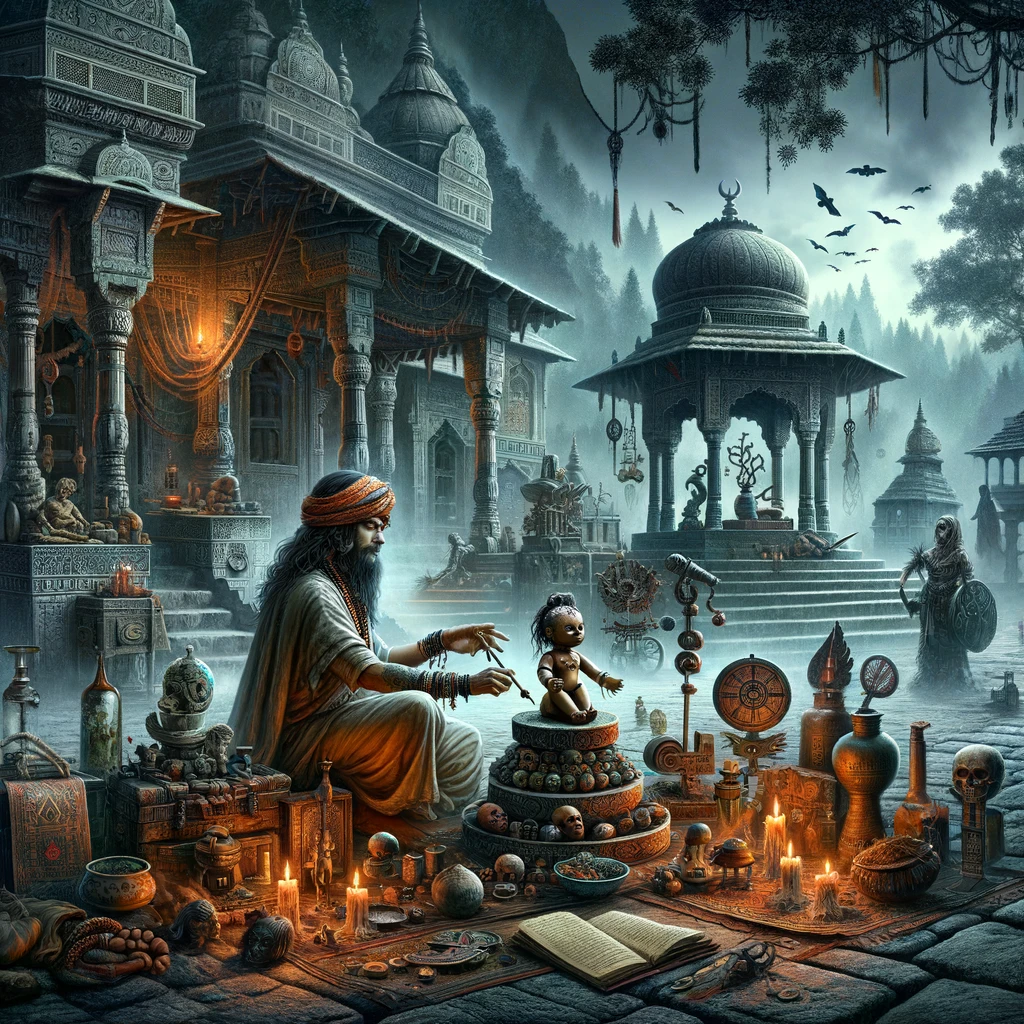
Many people have heard stories about the dark and mysterious world of black magic. These stories often include strange mantras, secret rituals, and the invocation of unseen forces believed to exist alongside humanity. However, only a few truly attempt to understand what these practices involve.
In this article, we offer a clear overview of Indian black magic traditions. We highlight commonly discussed practices, taboos, and beliefs associated with this ancient and controversial subject.
Black magic is often described as a powerful force that disrupts balance within the mind, body, and spirit. In Indian mythology, people believe that negative energy can enter a person’s life without their awareness, creating obstacles, confusion, and suffering. These beliefs shape how black magic is understood across many regions of India.
Tantrik Masters of Black Magic in India
Belief holds that black magic affects not only the target but also those involved in performing it. Although Indian law forbids such black magical practices, some individuals still pursue them for personal gain, revenge, or emotional release.
In India, the person believed to perform these spells is known as a Tantrik. Many view Tantriks as individuals who claim deep knowledge of occult forces and secret rituals.
According to folklore, the main goal of a Tantrik involves helping one person by harming another. This belief forms the core principle often associated with black magic. Tantriks are believed to draw on negative energy and direct it toward harmful ends.
Tantriks and Supernatural Forces in Indian Black Magic
Many stories claim that Tantriks can see or communicate with spirits. These accounts describe a harsh and demanding lifestyle filled with rituals and constant spiritual strain. As a result, folklore portrays Tantriks as leading isolated and complicated lives.
Some individuals reportedly perform these rituals for money. Others pursue them to deepen their knowledge of occult forces. Regardless of motive, fear and secrecy surround these practices.
Although many people fear black magic, some turn to it during desperate situations. These may include job struggles, fertility issues, career obstacles, or financial hardship. In such cases, belief overrides fear.
Indian black magic traditions often describe sacrifices as part of extreme rituals. These stories frequently appear in folklore and cautionary tales rather than everyday practice.
Clay Doll Rituals and Dark Intentions in Tantric Magic
Some legends describe the use of clay dolls in ritual work. These dolls are shaped to resemble the intended target. Practitioners attach personal items to the doll to strengthen the symbolic connection.
Belief suggests that whatever happens to the doll affects the person it represents. Chanting, symbolic actions, and focused intention play a role in these rituals.
According to folklore, the final goal may involve causing fear, illness, helplessness, or lasting harm. These stories serve as warnings rather than verified accounts.
Identifying Symptoms of Black Magic Influence in Indian Mythology
Indian folklore lists several signs believed to indicate the influence of black magic. Affected individuals may isolate themselves and avoid social contact. Irritability and sudden mood changes often appear in these stories.
Other commonly mentioned signs include unexplained neck or shoulder pain and neglect of personal hygiene. Some stories feature individuals talking to themselves for no apparent reason.
One symbolic belief holds that a Tulsi plant, often kept in Indian courtyards, can suddenly die. Folklore suggests this event signals a negative spiritual influence within the household.
These signs remain part of traditional belief systems and cultural storytelling rather than medical diagnosis.