
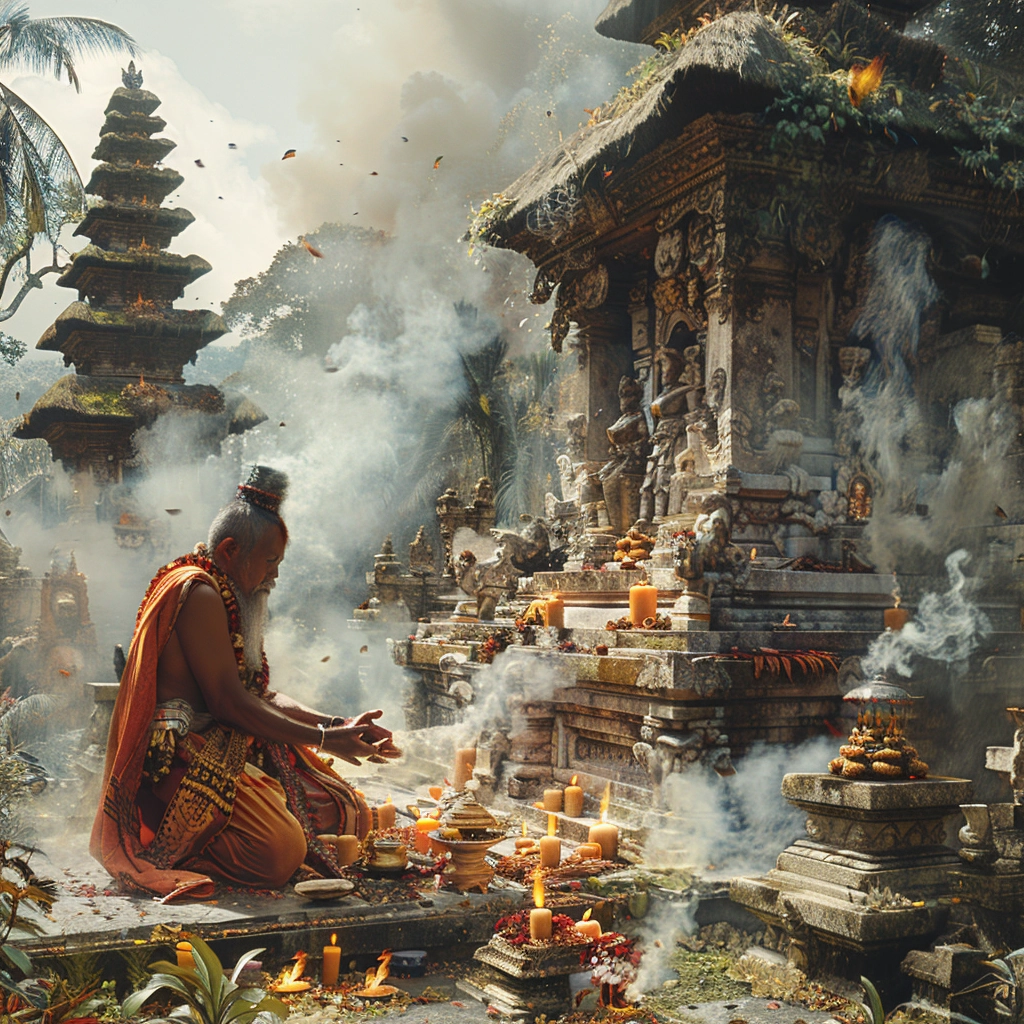
Indonesia, officially known as the Republic of Indonesia, is a Southeast Asian country made up of thousands of islands. With more than 300 ethnic groups, its culture reflects strong influences from India, China, Arabia, and Europe. Black magic remains a widely believed phenomenon in many parts of the country and continues to shape traditional rituals and local customs.
Bali’s Mystical Traditions in Rituals and Practice
Many visitors to Bali quickly notice the island’s deep connection to ritual and spiritual practice. From temple ceremonies to daily offerings, traditions play a visible role in everyday life. These practices reflect a strong belief in unseen forces and spiritual balance rather than a direct focus on black magic itself.
Across Bali and nearby regions, visitors can witness ancient rites that locals continue to preserve. Some ceremonies remain open to outsiders, especially those held within temples, offering insight into Balinese beliefs and customs. These rituals emphasize harmony, protection, and respect for spiritual forces.
Interestingly, many Indonesians state that they do not actively practice black magic. However, they strongly believe in black magic and occult forces. They also approach such matters with caution and discretion. Indonesians tend to be selective when it comes to rituals or spells, often interpreting unusual signs as symbolic warnings rather than direct attacks.
For example, finding a clove of garlic outside one’s door may signal an attempted curse from a former partner seeking revenge. Such signs often cause concern, even if no action follows.

Dark Mysteries of Black Magic in Indonesian Regions
Banyuwangi, Sumbawa, Banten, and the island of Lombok are regions often associated with strong beliefs in black magic. While many residents deny practicing such magic, stories of curses and supernatural influence persist. Banyuwangi, located between Java and Bali, has long experienced cultural tension between the two regions.
This tension has contributed to ongoing beliefs in spell casting and black magic. Local folklore connects these practices to conflict, misfortune, and unexplained events.
Historical sources suggest that the black magic practiced in Banyuwangi blends animistic traditions with Islamic theology. These beliefs grew stronger during periods of religious conflict, particularly during the Mataram court era in the sixteenth century. Some accounts trace the origins of these practices to Tulungagung, located west of East Java.
Today, belief in occult forces remains strong in and around Banyuwangi. Many residents attribute disasters, illnesses, and personal tragedies to black magic. These beliefs influence how people interpret both individual and communal misfortune.
Intense Black Magic Practices in Banyuwangi
Banyuwangi folklore describes two feared forms of black magic. The first, known as SIHIR, allegedly causes death or severe harm to enemies. The second, called BUSUNG, is believed to cause extreme abdominal swelling in the victim.
According to belief, BUSUNG victims suffer from internal damage caused by the magical insertion of objects such as nails, glass, or animals. Many claim these victims rarely survive. Stories describe this condition as both horrifying and irreversible.
Another feared practice, RAPUH, allegedly causes lifelong suffering. This spell targets health, leading to blindness, paralysis, or chronic illness. Practitioners associated with these spells are often called DUKUN. Although they appear mainly in Java, people across Indonesia believe in their influence.
Influence and Silence on Black Magic in Java and Bali
Most Javanese, who largely follow Islam, avoid discussing black magic openly. They rarely admit belief or involvement. However, during times of crisis, some quietly seek guidance from a DUKUN or a PEDANDA.
Because Indonesians tend to remain silent about black magic, discussing personal experiences remains uncommon. Some believe that claiming to be a DUKUN can instantly halt conversation. People may fear exposure or spiritual vulnerability.
It is strongly advised not to attempt such claims yourself. Instead, continue learning through reliable sources and approach these traditions with respect and caution.