
Hispaniola is a small island divided into two small Caribbean countries, one of which is Haiti. It occupies the island’s western side and is smaller than the eastern part. Haiti is mainly known for its frequent and long-lasting earthquakes, but again, let me tell all my readers that it is also known for its black magic and Vodou.
Haiti is said to have been discovered by Columbus during his trip to Asia. He claimed this island for the dwelling of the Spanish people and named it accordingly, which later came to be what we know today—HISPANIOLA. This island was divided into small territories, but after the government took power, it was split into two parts: HAITI.
Haiti has a strong cultural background rooted in Africa, primarily Western Africa. Its religion tends towards Latin American Christianity. Hence, black magic also prevails and is most similar to that practiced in Africa, especially in Vodou.
Haiti – Cursed by the devil?
It is said that a long time ago, the residents of Haiti had signed a deal with the devil, wherein they asked the devil to free them from the slavery of the French, which was done. Still, the devil cursed Haiti, for which, as of to date, Haiti is in poverty, illness, and disaster, wherein the only other country apart from Haiti, the Dominican Republic, on the same island of Hispaniola, flourishes with wealth and prosperity. This fact is also considered to be just a rumor or a storyline. Still, the evidence shows the truth, and hence, eventually, the residents of Haiti began practicing black magic, which was passed down from generation to generation.
Vodou Traditions in Haiti and the Reverence for Ancestral Bones
Vodou, also known as voodoo, is practiced as a religion in Haiti, like most African countries. But unlike other countries of the Caribbean, cannibalism is not practiced by the people of Haiti. Haitians believe in preserving their ancestors’ bones and show respect for those bones preserved in shrines. Haitians believe that the bones of their ancestors have magical and healing powers and hold them in high esteem. The Haitians celebrate the “All Souls Day” (as per the Roman Catholic calendar) as FET GEDE. They believe that their ancestors’ souls would descend from heaven and come to meet them by possessing a family member’s body. Even black magic spells are cast to invoke these ancestral souls for healing, protection, or acquiring wealth.
Respecting Ancestral Bones and Celebrating FET GEDE in Haitian Vodou Practices
Below, I have marked some essential features and other understandings of Vodou in Haiti, or the basic concepts of VODOU as they apply to the region.
There is only one God, Bondye, similar to GOD(S) of other faiths, but he is the only God. Apart from the only God, some spirits are primarily categorized into three sects.
2. The TWINS are known to be the mystical forces of good and evil. They are served with great care so that they can help you live a better life.
3. The DEAD are considered the souls of some person belonging to a specific family, also known as ancestral souls, whose body was not claimed after death.
The main reason for practicing voodoo, especially in Haiti, is its use for healing. A Vodou doctor is known as a houngan (male) or mambo (female). They perform black magic to heal or calm spirits, prepare love potions, and create death spells and curses. The houngan or a mambo may ask for some money for the spell or ritual they would perform for someone, but at times, they do not.
Differentiating Rada and Petro in Haitian Vodou Practices
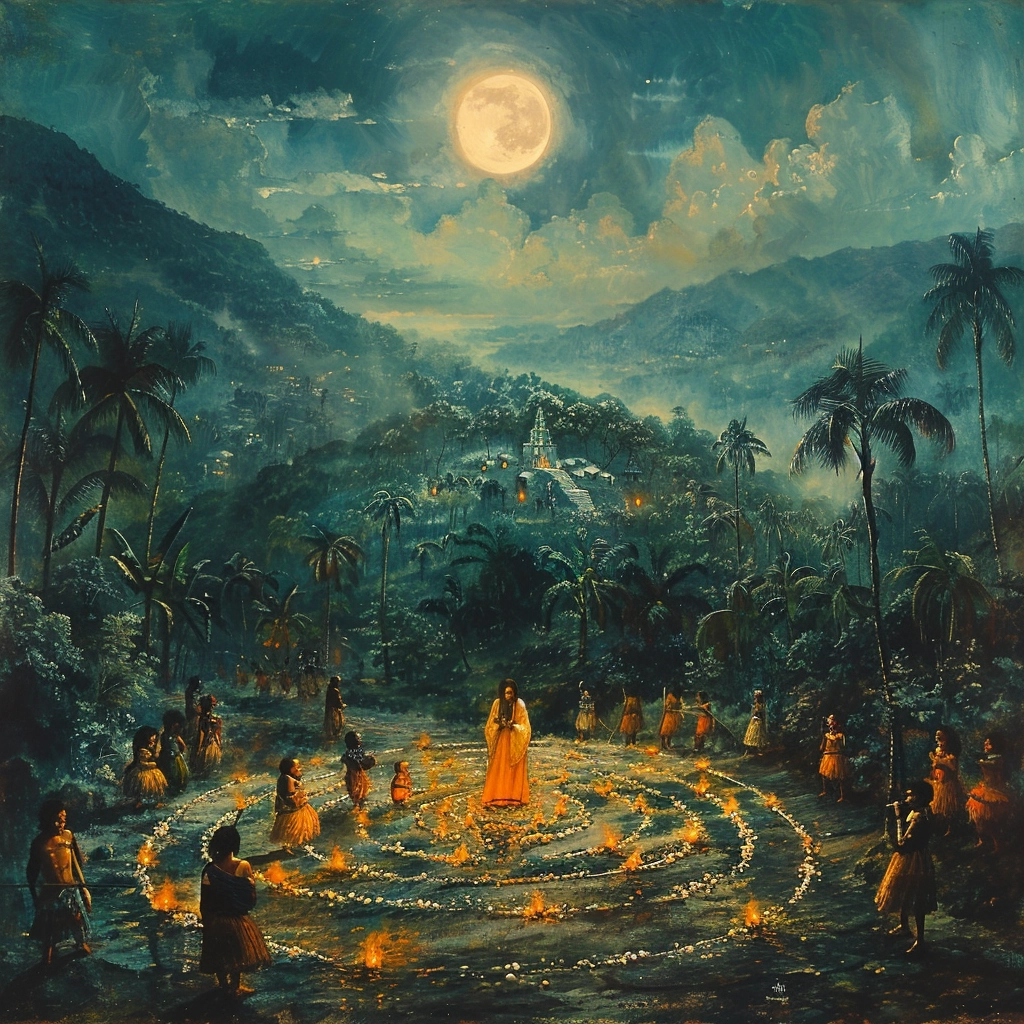
The rituals or black magic spells performed by the houngan or mambo occur in the open or in a place higher than the ground, like the roof, where everyone is invited to join, drums are played, and people dance to the tune in the presence of LA PLACE. It is said that since houngans and mambos use the LWA spirit, hence during the performance of the ritual, LWA comes and takes over a body so that LWA can give remedies or help to the person for whom the ceremony is performed.
Again, to be more precise, Vodou in itself is divided into two parts
1. Rada – the Vodou of a family spirit or a peaceful lwa.
2. Petro – also known as Congo, Vodou of angry and bad lwa.
Rada is performed for well-being, wealth, healing, and protection, whereas Petro is performed to kill someone or to curse and bring ill luck to someone. Well, this is all about Vodou and black magic in the Caribbean. To be more precise, black magic is practiced in Haiti. Before I end this, I have summarized some specific terms related to Haitian Vodou used in Haiti. Please read below to enhance your knowledge.
- Hounfo – the area or region of houngan or mambo’s guidance.
- Govi – a small earthen bottle into which the gros-bon-ange of dead ancestors are kept.
- Serviteurs – serious practitioners of voodoo.
- Ason -the magical shake of the houngan or mambo.
- Lave tet—also known as the washing of the head—is a beginner’s ceremony held for individuals after they are mounted for the first time.
- Kanzo – the introduction ceremonies for those moving into a severe level of Voodoo practice.
- Ason – the final beginning of being a houngan or mambo. This is a very secret ritual performed in the absence of others.
- Verve – a ritual of drawing different lwa with flour.
- Peristyle – a very tiny vodou temple.
- Poto mitan – a center pole inside the Vodou temple or peristyle where the rituals occur.
- Les Invisibles – all spirits.
- Les Mysteries – the lwa themselves.
- Crossroads – an image used in Vodou practice, where the world of spirit meets the earth.
- Legba – An older man who is the gatekeeper between the two worlds and the origin of life.
- Kalfu – a very dangerous lwa and equivalent to Petro, is the spirit of darkness and night.
- Papa Ghede – Lord of eroticism.
- Dumballah, the father figure, is the good snake and the path to peace and serenity.
- Agwe – The supreme of the seas.
- Ogoun – also known as the warrior spirit.
- Erzulie is Mother Earth and the spirit of love and beauty, and it is the most loved form of lwa.